Aside from the development of tools designed to support clinical and regulatory decision-making with the goal of enhancing patient health outcomes, Keras360 has strategically decided to extend its capabilities into the domain of artworks. We are firmly dedicated to the creation of machine learning tools and the establishment of protocols for image recognition, aimed at effectively identifying counterfeit renowned artworks. Currently, art forgery constitutes approximately 40 to 45% of the global art collectibles market. With this market valued at an estimated USD$65 billion (2023, by Arts Economics The Art Basel & Basel Art Market Report), it is plausible that around USD$26 to $29.25 billion worth of counterfeit pieces are in circulation. This astonishing figure does not account for artwork that has been stolen or those with indeterminate ownership status.

December 6th, 2024, heralds a pivotal moment as we conclude AF’s groundbreaking journey in research and development for Stage 1 art authentication, refer to Stage 1- 3 below. Since mid-October 2024, we have been excitedly unveiling our experimental records each week, showcasing the evolution of our work. Below, you’ll find our 10 captivating videos, which we encourage you to dive into—preferably in full-screen mode—to fully experience the rich detail in the authenticity box. Our innovative AF embedded tool is designed to reveal an image match with absolute precision when a 100% correlation is detected. As the ultimate guardian of authenticity, we recommend uploading a complete image; enriching it with segments will further bolster its credibility and enhance the analytical insights we provide.
For full image analysis: kindly refer to Videos 1, 2, 3, 5, 6, 9
For segmental or partial image analysis: kindly refer to Videos 4, 7, 8, 10
For 2025 new segmentation protocol : https://keras360.io/afbeta/segmentation-analysis/
Stage 1: Analysis from the artists’ perspectives
To achieve reliable standards in image recognition, a collection of artworks library is hence built to cross-validate the calculations. The image library shall be the baseline for refined tuning for image recognition and authentication. The upload test images by the user may have been subjected to manipulation or distortion in various ways. Therefore, it would be sensible to construct a tool that has some tolerance towards image noise, and the possibility in identifying mimicry impressions.
- Image distortion
Grayscale, Blurred, Motion Blur, Low resolution. - Unseen images aka. Negative Controls
Mimicry artistic impression and/or identify potential artists responsible for creating artwork from an unseen image or illustrating content never before encountered in machine learning. - Segmented analysis
The tool aims to identify artworks when given various segments in size and missed landmarks. - Reveal artwork profile
Information about the matched artwork – the location; last seen at auction/ museum/ stolen/ private collection; and closing bid, if appropriate. This step is only possible when a perfect match is found.
Learn more about the remaining R&D stages 2 & 3 below.
Stage 2
The development of a user-friendly interface or application is imperative to facilitate interactive access to precisely optimized information derived from machine learning, alongside the associated value of the artwork. The established protocol will function as an optimized image recognition tool for 2-Dimensional (2D), 3D and multi-perspectives analysis, meticulously capturing even the most minute details, including the probable timing of the last paint application on the surface. This information will undergo cross-referencing with the event history related to art restoration efforts.
Stage 3
A public access interface shall be established for students and enthusiasts to partake in the examination of artworks. This interactive interface will integrate a machine-learning component, with additional details to be disclosed as the development advances.
The Waterhouse, Keras360 is pleased to announce the completion of Stage 1 and the release of our WhitePaper.
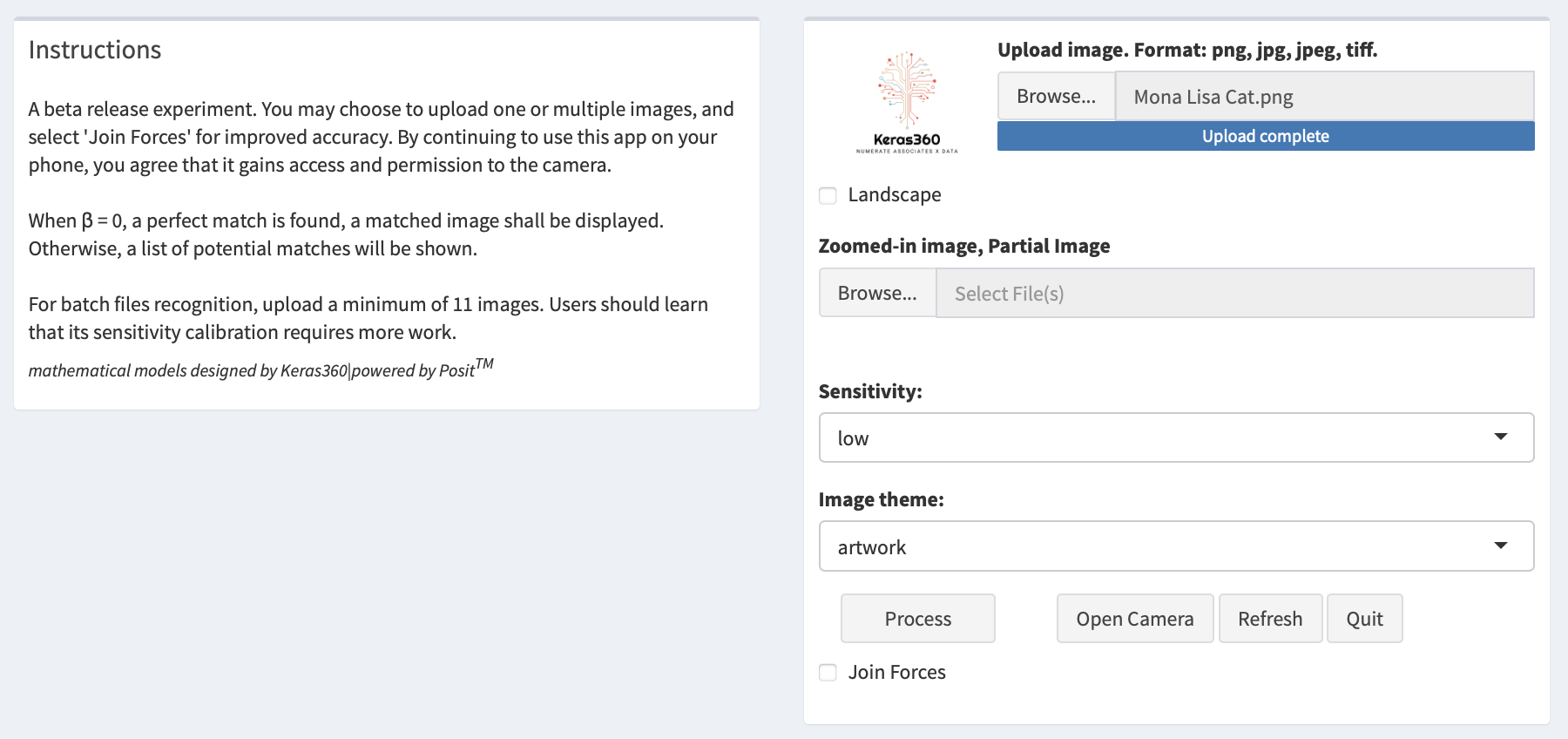
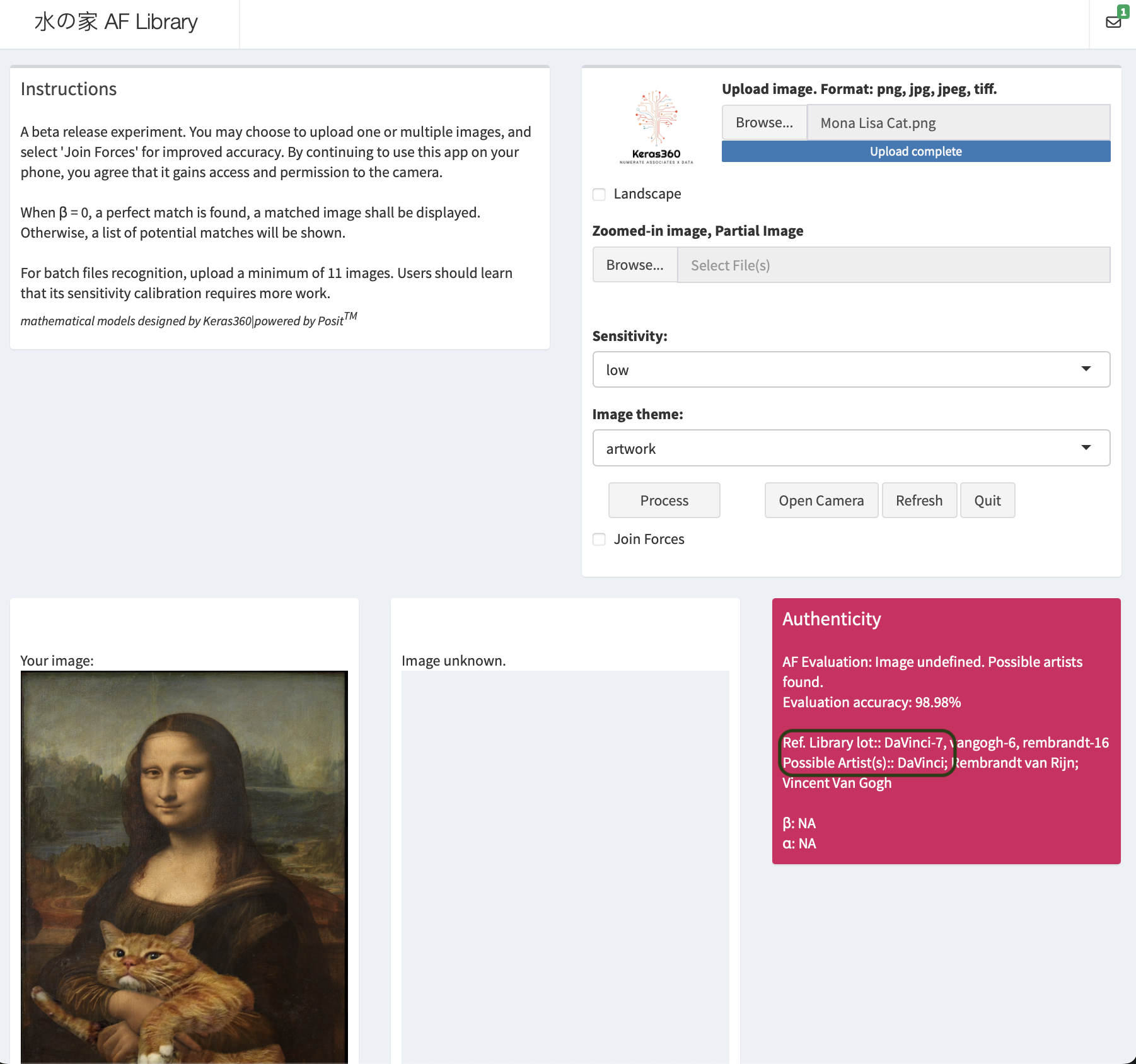
N.B.: Enter full screen mode for the “Authenticity Box“
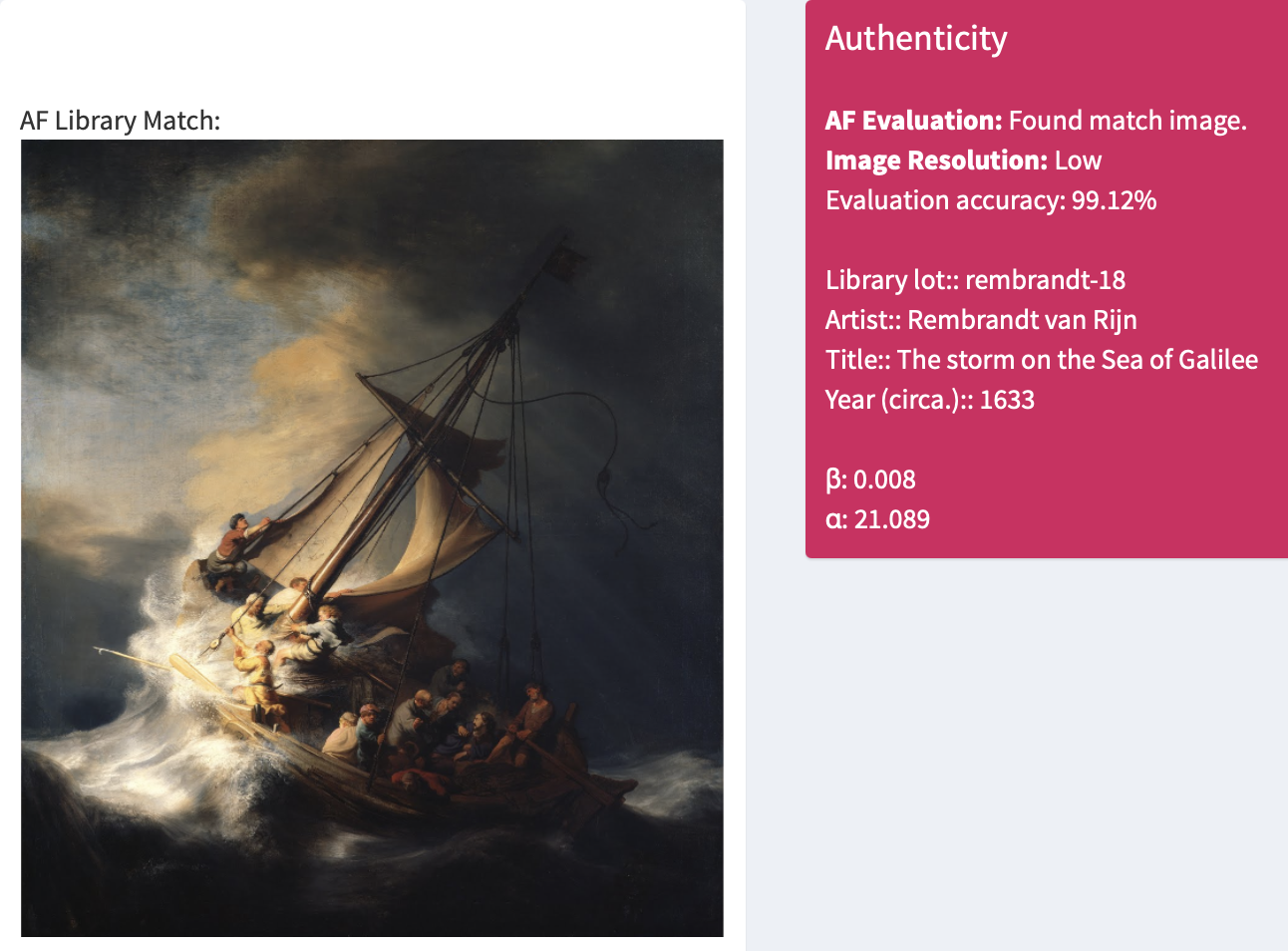
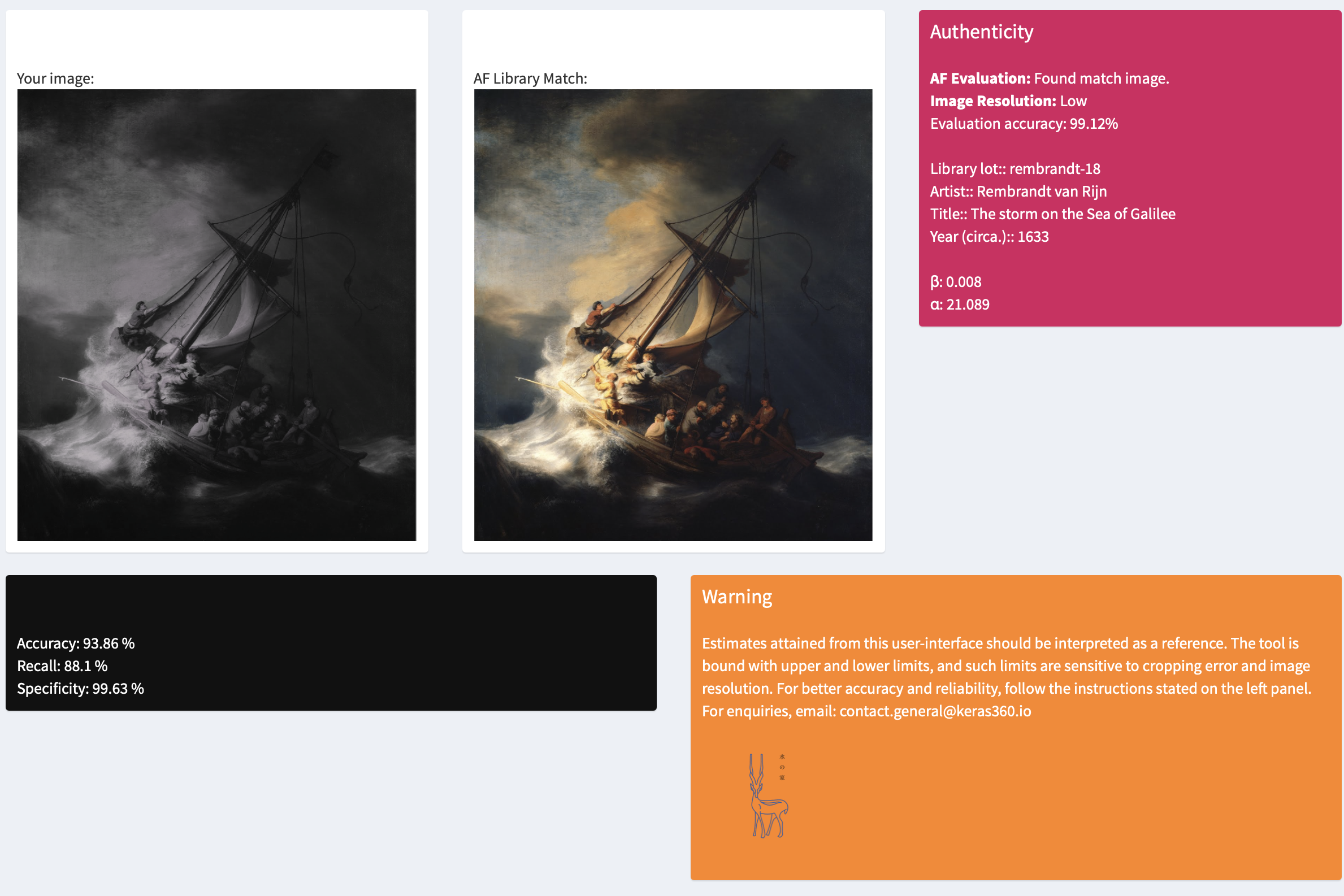
Video 1: Beta user-interface for image recognition utilizing “+” controls in both grayscale and original color images, featuring Rembrandt van Rijn’s The Storm on the Sea of Galilee (distorted into gray shade), Wu Guan Zhong 吴冠中 JiangNan Village and Wu Da Yu’s 吴大羽 colored grass (in their original hues).
Video 2: Detection of generative AI mimicry images. A mimicry of the renowned artists’ Wu Guan Zhong 吴冠中 and Sanyu 常玉 . Plus, sci-fi AI images. For optimal visual experience, please wait for the video to complete loading.
Video 3: Seen and Unseen artwork images. In this compelling example, Oscar Claude Monet’s masterpieces are showcased to assert that the authentication tool proficiently identifies signals specific to the artist. The Art Forensic (AF) library houses some collection of Monet’s artworks. Nonetheless, certain images are purposefully set aside as validation controls to substantiate the objective and hypothesis of the experiment. Notably, the first image, Impression, Sunrise (1872), resides in the AF library. This is accompanied by two unseen images: one of Monet’s stunning water lilies oil paintings and another of a painting he crafted twice: Boulevard des Capucines (Pushkin Museum version 1873 – 1874).
Video 4: Primary segmentation analysis – restricted information. This marks an exciting foundation for our journey into segmented image processing – an essential leap towards crafting a robust architecture for authentication. In this captivating example, Sanyu’s (Chinese: 常玉) mesmerizing 8-tailed Goldfish transitions from step 1: a full image, to step 2: a partial image, showcasing the artistry within. The AF tool demonstrates its immense capability to identify that this is indeed part of Sanyu’s cherished artwork (library lot: Sanyu-14), as highlighted in the ‘Authenticity’ box at the end of the analysis. N.B., In this beta-experiment, the thrill of displaying the correct image is reserved solely for instances of a perfect match.
Kindly refer to Videos 7, 8, 10 for secondary segmentation analysis.
Video 5: Poor resolution – ISO and blurred images.
As we venture into the realm of secondary segmentation analysis, it is paramount to highlight the vital importance of embedded calibration in the AF tool. This innovative tool was birthed from the foundational principles of match and mis-match. Imagine the thrill of a potential match between an AF library image and the stimulus, and the excitement of seeing how seamlessly they align. Yet, when faced with images originating from the camera that are blurred or possess poor resolution, we must confront the reality of sensitivity and resilience tests head-on. In this groundbreaking experiment, Keras360 has bravely lifted the sensitivity limits for image-match detection, showcasing the undeniable necessity of calibration for the evolution of future advancements.
Image choice: Rembrandt van Rijn – Syndics of the Drapers’ Guild aka. The Sampling Officials, 1662 (Dutch: De Staalmeesters).
Video 6: Women – Manet, Monet and Morisot. If the recognition of Monet’s unseen artworks (Video 3) was Keras360’s first exhilarating breakthrough, this was the powerful catalyst that ignited a creative revolution. In the realm of artistry, the evolution of skill reflects the very essence of human existence, a journey shaped by the trials and triumphs of life itself. This truth resonates deeply with the legacies of revered visionaries like Wassily Kandinsky and Pablo Picasso. The connection becomes even more palpable when we consider a collective of artists flourishing in the same vibrant era. Take, for instance, the 19th century, where French luminaries Édouard Manet and Oscar Claude Monet danced in synchrony with their brush strokes, styles, and artistic visions. At times, the lines between their masterpieces blurred, leaving onlookers in awe.
In this captivating demonstration, Keras360 unveils a groundbreaking validation negative control: the unseen artist and image. Enter the remarkable Berthe Morisot, a pioneer who eloquently captured the female experience of the 1860s. Though perhaps overshadowed by her brother-in-law Édouard Manet, the undeniable truth remains: Manet’s illustrious reputation undoubtedly ignited a spark of inspiration within the family, especially for Morisot’s husband, Eugène Manet. As the validation negative unfolds, it becomes clear that Monet and Manet must be contenders for a place within the esteemed “Authenticity box: List of possible artists.“
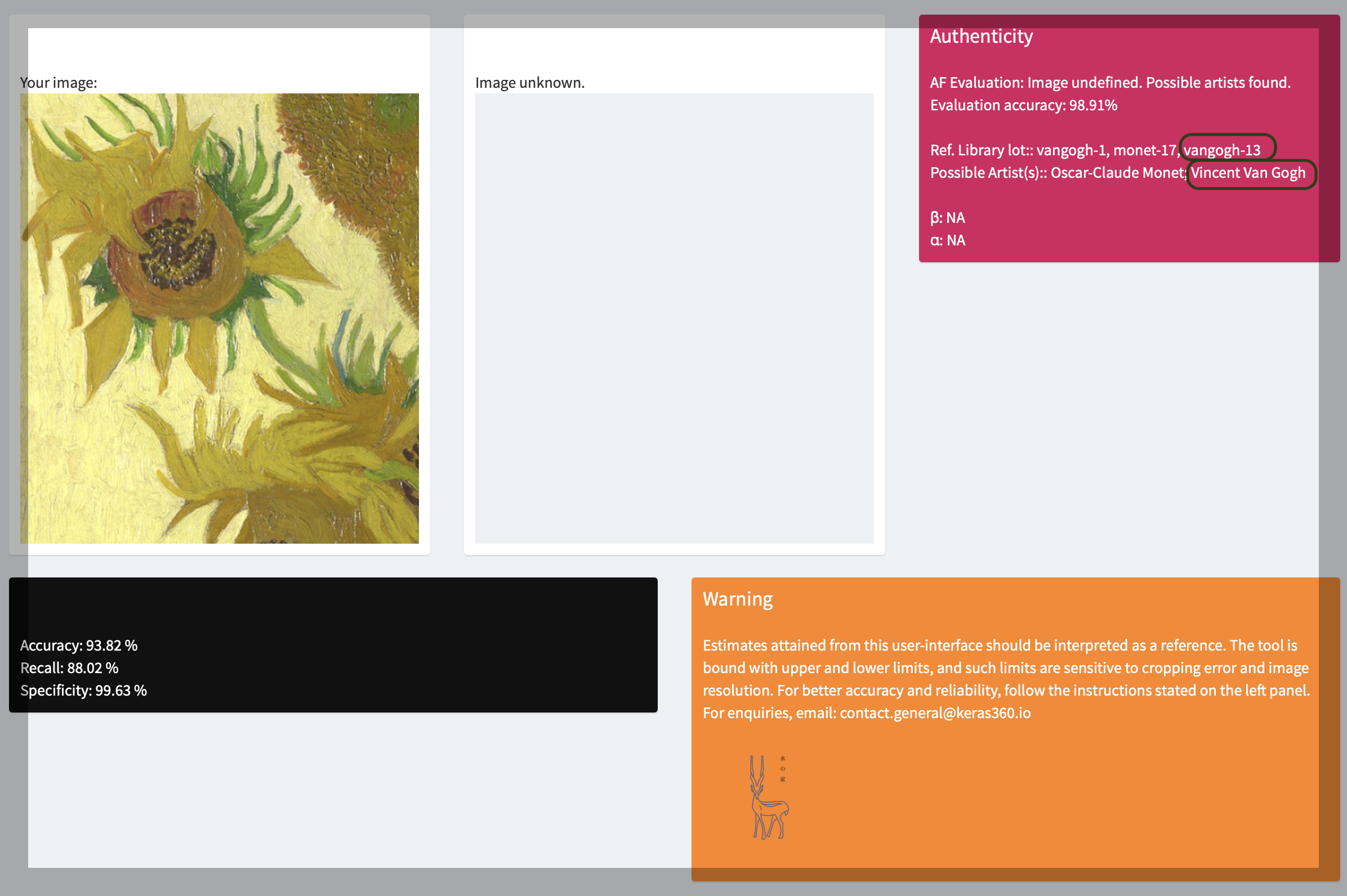
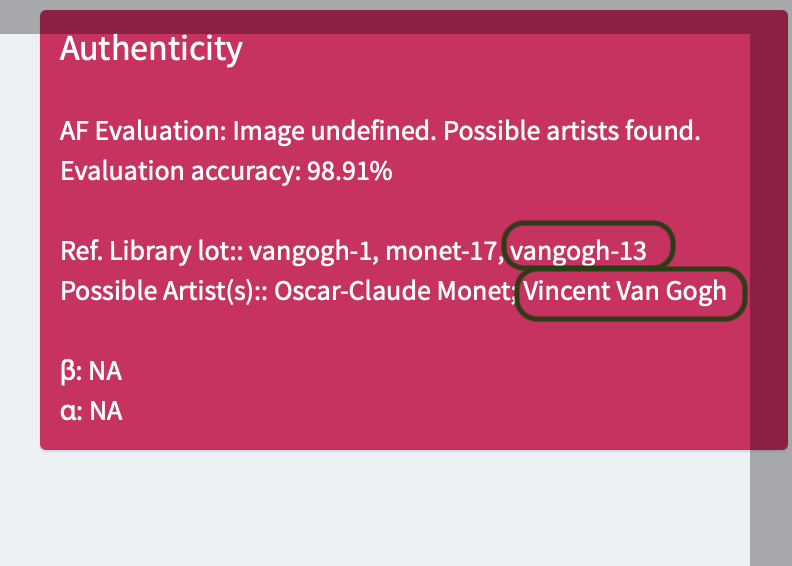
Video 7: Sunflowers Version 4 and Praying Woman. Immersing ourselves in the enchanting realm of 19th Century paintings, we cannot overlook the profound impact of Vincent van Gogh’s masterpieces. Unlike the more conventional realism of his contemporaries, Manet, Monet, and Morisot, van Gogh’s work resonates with raw emotion and exceptional spirit. In this captivating illustration, we’ve opted for van Gogh’s mesmerizing forth version of Sunflowers, distinguished by its radiant yellow and fiery orange hues; Library lot: VanGogh-13. This stunning image has been artfully divided into various segment sizes: S1, S2, S3, S4, as we explore the exciting concept of segmentation—an intriguing method of feeding partial information to machines for image recognition. While it’s certainly ambitious for the machine to identify the top 10 uniquely matched images in AF library, our experiment’s grand objective—Authentication must stay in alignment. Hence, returning only three possible matches. Though it was a van Gogh’s artwork, Monet’s own Bouquet of Sunflowers (Library lot: Monet-2) stands as a cherished reference, illustrating how two or more artistic souls can beautifully intertwine in similar expressive strokes.
The final jewel in this exploration is the awe-inspiring Praying Woman by After-Rembrandt. It has long been believed that this poignant artwork was crafted by a devoted pupil of Rembrandt, who sought to replicate the master’s evocative brushstrokes and perspectives. Yet, with scant information and the myriad variations of After-Rembrandt works, pinpointing the singular original can be a formidable challenge. In this thrilling experiment, we endeavor to capture the artistic signals of the legendary Rembrandt van Rijn, employing our innovative tool. N.B., the works and profiles of After-Rembrandt have yet to grace the AF library, leaving room for wonder and discovery.
The moment you unveil an unseen or a segmental image, the Authenticity Box springs to life, igniting a fervent quest to unveil the artist behind the masterpiece. This remarkable tool passionately delves into the depths of data information and signals in Art Forensics (AF) library, meticulously searching for the essence of creativity that resonates within its vast collection of relevant artworks. In this example, library lot : vangogh-13 encodes for Sunflowers version 4 created by Vincent van Gogh.
Video 8: Segmental analysis – An additional UI field. Within the fields of image processing and recognition, it is feasible to segment images into distinct components to enhance authentication processes. Users may experience a more efficient pathway to authenticity by focusing on specific landmarks and unique brushstrokes associated with the original artist. Accordingly, the Keras360 AF authenticity tool has introduced an additional field intended for magnifying particular sections of images. As previously addressed in our prior videos, segmentation frequently leads to an information loss, wherein the machine is presented with only a restricted portion of the original work. This methodology proves to be especially beneficial in forensic applications when over 70% of the original image is either damaged or irretrievable. While it is technically accurate to assert that authentication relies exclusively on the specific segmented image rather than any absent segments, the AF authentication tool provides valuable insights into the segmental artwork.
In this beta experiment, Keras360 has chosen the works of Sanyu 常玉 (1895 – 1966), a distinguished Chinese artist who resided in Paris, France during the 1920s and emerged as a trailblazer of modern art for the École de Paris. His distinctive Chinese-French artistic influence constitutes a compelling choice for this experiment.
Image 1: Eight-tailed goldfish;
Image 2: Vase blanc fleurs blanches fond rose.
This represents Keras360’s third illustration on segmental analysis. It is advisable to refer to Videos 4 and 7 for foundational concepts in segmentation analysis, which are predicated on a different calculation.
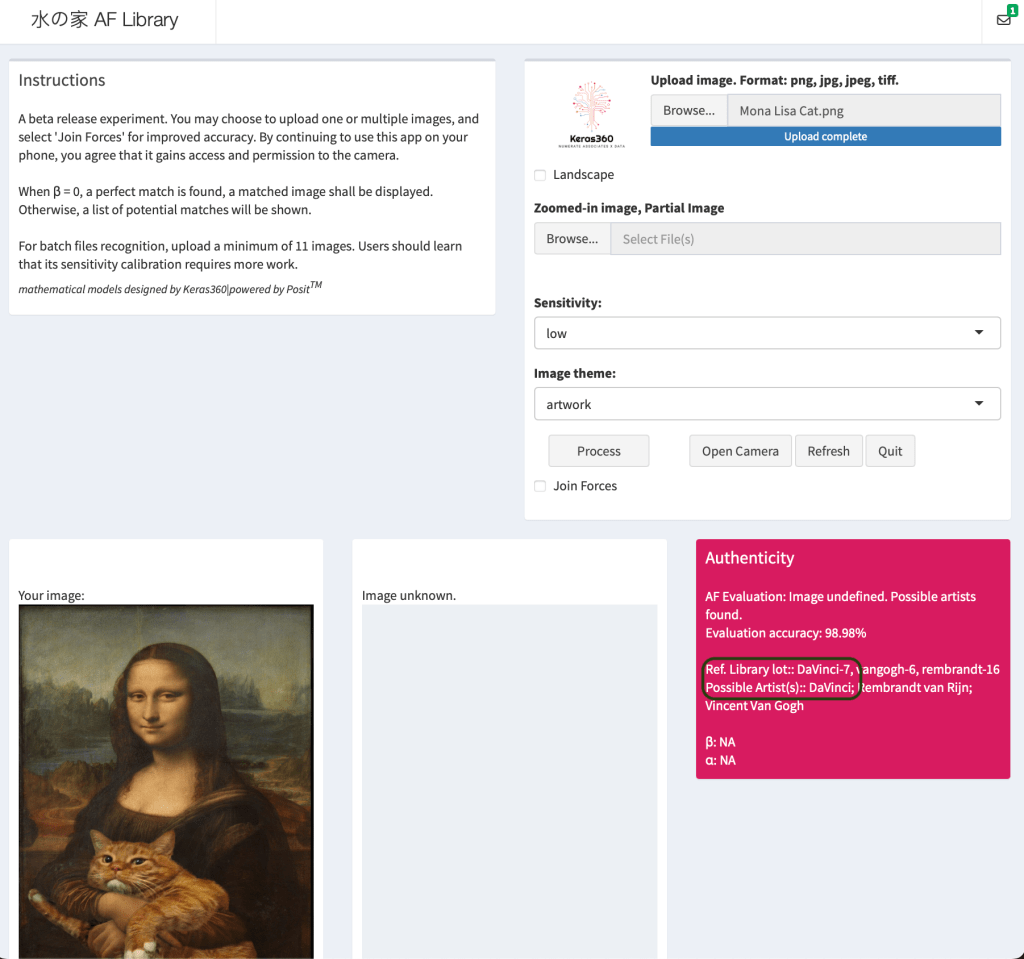
Video 9: Maybe it’s Da Vinci. In our previous videos, we have illustrated the application of our Art Forensic (AF) tool in analyzing unseen digital images with the intention of extracting valuable information regarding their creator. Leonardo di ser Piero da Vinci, widely recognized as Da Vinci, despite being an extraordinary artist, possesses fewer than 20 artworks that have been officially acknowledged as his creations. Among his most renowned works is the immovable mural painting, ‘The Last Supper,’ located in the refectory of the Convent of Santa Maria delle Grazie in Milan, Italy. In the field of medicine, Da Vinci is notably recognized for his significant contributions to human anatomy and the anatomical dissections of bovines.
This experiment evaluates the identification of Da Vinci’s brushstrokes and perspectives. A comparison is established based on the available Da Vinci artworks in our AF library, such as the Mona Lisa — this artwork was initially acquired by King Francis I of France in the 16th century and is now owned by France, currently situated at the Louvre Museum in Paris. Few individuals are cognizant of the lesser-known version of the Mona Lisa, known as the Isleworth Mona Lisa. This version is also believed to be a work completed by Da Vinci, though it has not received an official declaration of authenticity. Next, we consider ‘Mona Lisa number 3’—Young Woman on the Balcony, which has been confirmed to have been completed by Raphael (Raffaello Santi) circa 1505. In this demonstration, we have excluded Raffaello Santi’s work from the AF library. This analytical step is imperative to ascertain that the tool does not generate false positives; it is worth noting that Raffaello Santi did not receive art instruction from Da Vinci. In fact, according to art history, Da Vinci commented on Raffaello Santi as a source of intimidation or conflict concerning his artistic expressions. Given that both remarkable artists coexisted during the same period without sharing similar artistic influences, it is reasonable to assert that the AF tool will not detect any common signals with Da Vinci’s work.
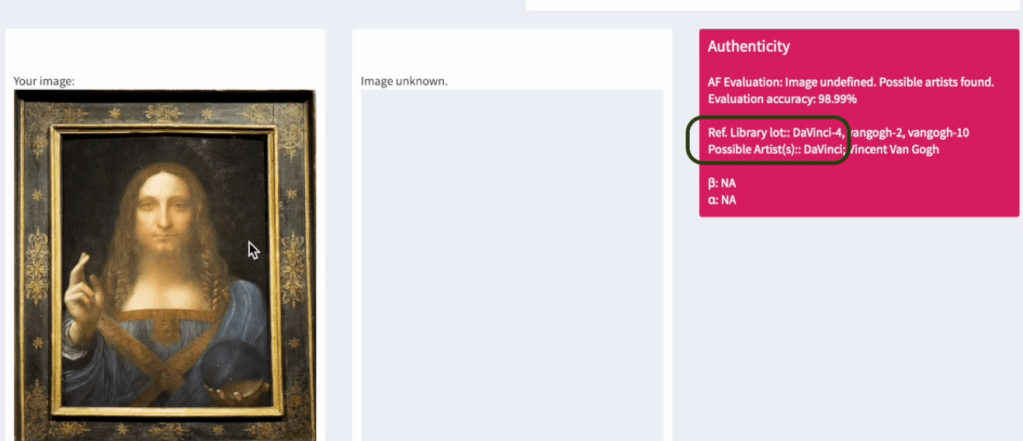
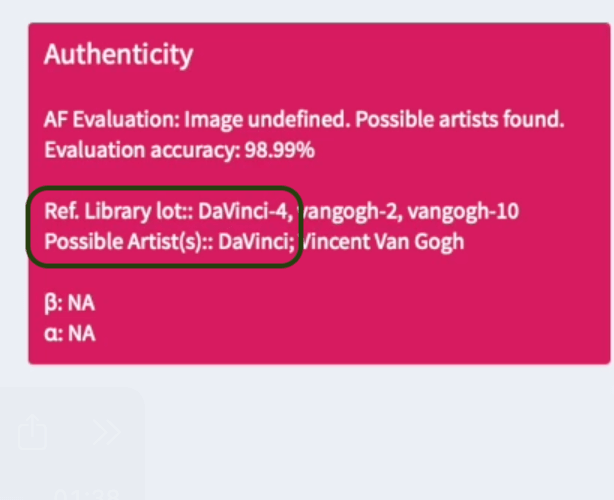
Salvator Mundi, the artwork that achieved the highest bid in history, was sold for US $450.3 million in New York in November 2017. Although there were speculations regarding its authenticity as a Da Vinci creation, we submitted the digital image from the auction listing to verify the presence of Da Vinci’s imprints; see video clip at 1:05.
The final step entails a digitally manipulated image of the Mona Lisa : ‘ Mona Lisa number 4′ .
Video 10: Just One – One Solid Color.
This marks the exhilarating conclusion of our authentication series for Stage 1 Art Forensics! In this final groundbreaking experiment, we dive into the fascinating realm of a unique analytical metric—specifically, the bold extraction of output from a single, solid color (think white, black, grey, orange, and more!). Imagine the images segmented to reveal dazzling partial or magnified glimpses of the entire artwork. However, presenting an image made up solely of a solid color, devoid of any distinguishing brushstrokes or variations in hue or shade, might mean a degree of diminished specificity. Yet, in the context of those solid colors, this innovative approach promises to unveil profound insights into the levels of accuracy through the captivating Dice Coefficient protocol.
Depending on how you wish to analyze segments of an image, the two upload fields could lead you down different analytical paths. As clearly illustrated in the user interface, the top upload follows the cutting-edge Keras360 filter protocol, while the bottom one employs the intriguing Dice Coefficient. Prepare yourself: a segmented image showcasing a vibrant solid orange hue from Sanyu’s “Eight-tailed Goldfish” could very well conjure results that echo Vincent van Gogh’s iconic self-portrait beard!
If you feel a spark of curiosity about the motivation behind the creation of the AF authentication tool for paintings and images, there’s an enlightening whitepaper waiting for you to explore!
A shout-out to all audience:
- If you are interested in contributing to this modest project venture, we warmly invite you to contact us.
- If you wish to utilize any of the captivating videos showcased on keras360.io, we kindly invite you to send us a note as a gesture of acknowledgment. This effort will not only aid us in tracking their circulation but also foster a sense of community and collaboration. Furthermore, the inspiring Generative AI images featured in our demos tend to transcend traditional boundaries, captivating the minds of all who encounter them.
For enquiries: contact.general@keras360.io
All rights reserved @Keras360.
Other relevant pages:
Keras360 AF beta – Chinese site
WhitePaper Series II – Art Forensics

 Keras360 水の家